
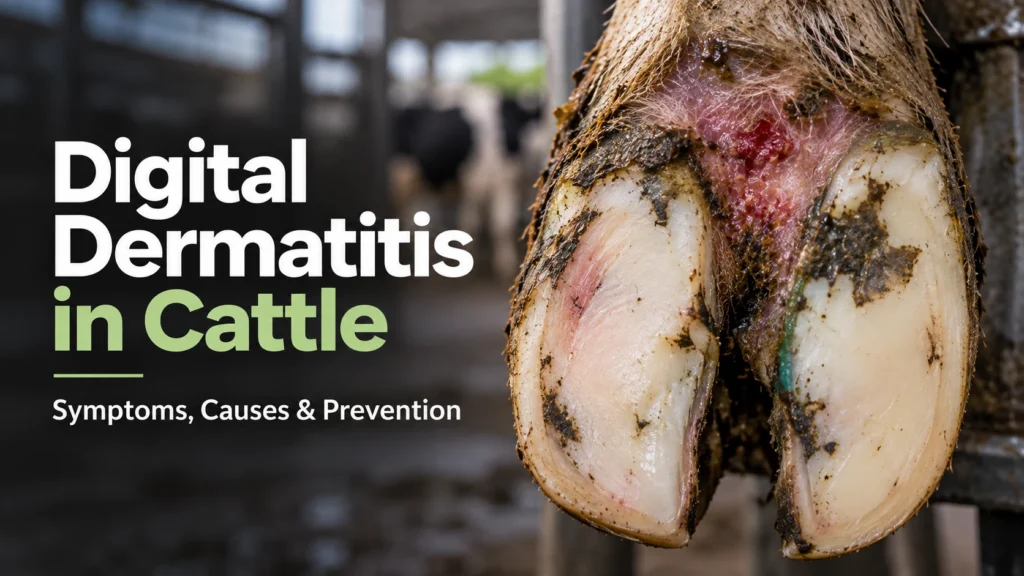
Noticed your cow limping or favoring one foot? Maybe she is taking shorter steps, shifting her weight when standing, or simply moving differently from the rest of the herd. Something hurts, and the feet are one of the first places worth checking.
Once you safely lift and examine the affected foot, you may find the problem around the heel rather than on the bottom of the hoof. A raw, red lesion in this area could be digital dermatitis, an infectious and often painful skin disease of cattle feet. It can interfere with normal movement and may become a recurring herd problem when the conditions that allow it to spread remain in place.
Digital dermatitis in cattle is also easy to confuse with other causes of cattle lameness. Foot rot, sole ulcers, white line disease, injuries, and several other problems can change the way a cow walks. Understanding what you are looking at can help you recognize trouble earlier and know when professional hoof care or veterinary attention is needed.
What Is Digital Dermatitis in Cattle?
Digital dermatitis in cattle is an infectious disease involving the skin of the cattle foot. It most commonly affects skin around the heel and interdigital cleft, although lesions can occur in other areas of the foot. Treponema species are considered an important part of the group of bacteria involved in the development of the disease.
You may also hear cattle owners refer to digital dermatitis as hairy heel warts. Some lesions develop a rough or proliferative appearance that helps explain the nickname. Active lesions, however, can look very different from the old, wart-like lesions people sometimes associate with the disease.
Quick Answer
Digital dermatitis is an infectious skin disease of cattle feet that commonly produces painful lesions near the heel. An affected cow may limp, take shorter steps, or avoid placing normal pressure on the affected foot. Controlling the disease usually requires identifying and managing individual lesions while improving hygiene and reducing exposure across the herd.
A Cow Is Limping. What Should You Notice First?
Start with the cow, before starting with the hoof.
Watch her walk on a surface where you can see several uninterrupted steps. Is she shortening the stride on one side? Does she hesitate to place a particular heel down, or does she move more slowly than the cattle around her?
Lameness tells you that something may be painful, yet it does not identify the cause by itself. Merck Veterinary Manual notes that many cases of cattle lameness involve hoof lesions, although injuries and problems higher in the limb can also cause lameness.
That gives us an important rule to remember throughout this article:
A limp tells you something hurts. It doesn’t tell you why.
The next step is finding where the problem is.
Now Look at the Foot: Where Is the Problem?
Once the animal can be safely restrained, examine the entire foot instead of focusing only on the hoof wall. Look at the sole, the space between the claws, and especially the skin around the heel. The location of the problem can give you important clues.
Digital dermatitis commonly occurs around the interdigital cleft on the back of the foot. Lesions can also appear in the interdigital space or toward the front of the foot, which is one reason appearance and location should be considered together.
Cleaning manure and debris away may reveal something almost invisible while the cow was standing. A small lesion hidden behind the heel can cause considerably more discomfort than its size suggests.
What Does Digital Dermatitis Look Like?
There is no single appearance that covers every case of digital dermatitis. The lesion changes as the disease develops, heals, or becomes chronic. This is why one photograph on the internet should never become your only basis for deciding what is wrong with a cow.
An active lesion can be bright red and sharply defined. Some develop the moist, raw surface often described as strawberry-like, while chronic lesions may become darker, thickened, or develop projections that resemble coarse hairs.
Early Digital Dermatitis
An early lesion can be surprisingly small. The skin may show a localized red or ulcerated area measuring less than about 2 centimeters across. At this stage, the animal may already show sensitivity even though the lesion does not look dramatic.
This is one reason routine observation matters. Waiting until a cow is obviously lame can allow a foot problem to progress considerably before anyone gets a good look at it.
Active Digital Dermatitis
As the lesion becomes active, it may grow into a larger raw area. The classic active lesion is often painful, ulcerated, and more than 2 centimeters in diameter. The surface may have the reddish granular appearance that leads people to compare it with a strawberry.
A cow with an active lesion may react strongly when the area is touched. That sensitivity is another reason examination should be done safely and with appropriate restraint.
Chronic Digital Dermatitis
Older lesions can look quite different. The skin may become thickened or irregular, and some chronic lesions develop a proliferative appearance. These changes can remain after the intensely painful active phase has passed.
Chronic does not necessarily mean the problem is finished. A small active lesion can develop inside an older chronic lesion, creating what researchers classify as an M4.1 lesion.
The M0–M4.1 Stages of Digital Dermatitis
Veterinarians and researchers commonly describe digital dermatitis using an M-stage classification system. You do not need to memorize every stage to recognize that a foot needs attention, though knowing the system makes veterinary reports and hoof-health records easier to understand.
M0: Healthy Skin
M0 means there is no visible digital dermatitis lesion. The skin appears healthy.
M1: Small Active Lesion
M1 describes a small active lesion, generally less than 2 centimeters across. It can represent an early stage of disease.
M2: Larger Active Lesion
M2 is the classic painful active lesion. It is generally larger than 2 centimeters and may have the characteristic ulcerated or strawberry-like surface.
M3: Healing Stage
M3 describes a lesion that has entered a healing stage, often with a scab-like surface following treatment. The appearance is changing as the active lesion resolves.
M4: Chronic Lesion
M4 represents chronic alteration of the skin. The area may become thickened, rough, or proliferative.
M4.1: Chronic With New Activity
M4.1 occurs when a small active lesion develops within an existing chronic lesion. It is a useful reminder that apparently old digital dermatitis can become active again.
Digital Dermatitis or Something Else?
Here is where hoof problems become interesting. Two cows can both limp on a rear foot and have completely different problems underneath them.
Digital dermatitis is one possibility. Foot rot, sole ulcers, white line disease, hoof injuries, and deeper infections can also affect movement. Merck separates cattle hoof disorders into infectious lesions such as digital dermatitis and foot rot, and noninfectious hoof lesions such as sole ulcers and white line disease.
That means the useful question is rarely, “Is my cow lame?” You already know she is. The better question is, “Where is the problem, and what does the affected tissue look like?”
Foot Rot vs Digital Dermatitis in Cattle
Digital dermatitis and foot rot are commonly confused because both can cause cattle to become lame. The visible changes are usually found in different tissues, however, and foot rot often produces obvious swelling.
| Feature | Digital Dermatitis | Foot Rot |
| Main tissue involved | Skin around the foot | Interdigital soft tissue |
| Common clue | Raw or chronic heel-area lesion | Swelling and inflammation |
| Lameness | Can be significant | Often significant |
| Infectious | Yes | Yes |
| Professional diagnosis helpful | Yes | Yes |
If there is substantial swelling around the foot or lower limb, do not assume you are dealing with a simple case of digital dermatitis. Deeper infections can require a very different response.
Digital Dermatitis vs. a Sole Ulcer
Now imagine lifting the foot and finding the problem on the sole itself. That changes the picture.
A sole ulcer involves the hoof horn and underlying tissues rather than primarily being a skin lesion around the heel. Sole ulcers belong to a group of noninfectious hoof horn disruption lesions, while digital dermatitis is classified as infectious.
Both can make a cow lame. The location and type of tissue involved help separate the two.
Digital Dermatitis vs. White Line Disease
White line disease develops around the junction between the hoof wall and sole. Damage in that area can allow material to become packed into the hoof and can eventually lead to deeper problems.
Again, location matters. A painful heel skin lesion points the investigation in a different direction from separation or damage along the white line.
This is where a skilled hoof trimmer or veterinarian becomes valuable. Someone who handles cattle feet routinely is often looking at the whole foot while the owner is focused on the most obvious spot.
What Causes Digital Dermatitis?
Digital dermatitis involves several bacteria rather than one simple organism acting alone. Treponema species are strongly associated with the disease and are considered an important component of the bacterial community involved in lesion development.
The condition also depends heavily on the environment around the foot. Constant moisture can soften and damage the skin barrier, while manure and abrasive walking surfaces can increase exposure and irritation. Once that protective skin becomes compromised, bacteria have an easier opportunity to invade.
Think of healthy skin as the first fence protecting the foot. When that fence stays wet and damaged, the challenge facing the animal becomes much greater.
How Does Digital Dermatitis Spread Through a Herd?
Digital dermatitis is considered an infectious herd disease, with transmission occurring through an environment contaminated by the organisms involved. This helps explain why treating one obvious cow may improve that individual while leaving the larger herd problem untouched.
Researchers have also found associations between digital dermatitis and biosecurity practices. A Danish herd study found higher prevalence associated with factors including recent cattle purchases and weaknesses in external biosecurity.
The boots, equipment, and surfaces moving between cattle deserve attention as well. Recent research has investigated Treponema species on hoof-trimming equipment and trimming chutes, reinforcing the importance of cleaning and disinfection in hoof-health work.
Can Beef Cattle Get Digital Dermatitis?
Yes. Digital dermatitis receives enormous attention in the dairy industry because cows spend considerable time on managed walking surfaces and are routinely observed for lameness. The disease can affect beef cattle as well.
University of Delaware Extension has specifically highlighted digital dermatitis as more than a dairy-herd problem. Conditions that keep feet wet or contaminated can still create an environment favorable to disease in other cattle operations.
For a beef breeder, that makes hoof health worth watching even if digital dermatitis has never been a major herd issue. Good cattle observation catches many problems while they are still small.
What Happens If Digital Dermatitis Is Ignored?
Pain changes behavior. A cow with a sore foot may shorten her stride, spend more time standing differently, or become reluctant to move normally.
Lameness also carries wider welfare and production consequences. In beef cattle, Merck identifies potential losses associated with decreased performance, weight loss, treatment costs, and reduced market value among the broader consequences of lameness.
Digital dermatitis can also become chronic. Research on disease stages shows that chronic M4 lesions can persist and play an important role in the epidemiology of digital dermatitis within affected herds.
How Is Digital Dermatitis Diagnosed?
Diagnosis begins with seeing the lesion clearly. The foot needs to be safely restrained and cleaned well enough to determine where the lesion starts, what tissue is involved, and whether another hoof problem is present.
Typical digital dermatitis lesions are often diagnosed based on their appearance and location. Merck describes lesions ranging from painful bright-red ulcerated areas to darker chronic lesions, with severe cases sometimes developing proliferative tissue.
When the cause of lameness is uncertain, veterinary evaluation becomes especially important. A cow can have more than one hoof problem at the same time, and some deeper conditions need prompt treatment.
How Is Digital Dermatitis Treated?
Treatment should focus first on the individual animal with the active lesion. Veterinary guidance commonly includes topical therapy for active digital dermatitis, although legally available products and appropriate use vary by location.
That is why there should not be one internet recipe applied automatically to every herd. Your veterinarian can determine which products are appropriate, how to use them, and whether something that looks like digital dermatitis could actually be another condition.
The goal is also larger than making the lesion look better for a few days. Pain needs to be addressed while the management conditions allowing new lesions to develop are brought under control.
Does Digital Dermatitis Need to Be Trimmed Away?
This is an important distinction.
Digital dermatitis primarily affects skin, so you should not picture it as a piece of bad hoof horn that simply needs to be carved away. Hoof trimming can expose the foot for proper examination and can address other hoof abnormalities that may exist at the same time.
An experienced hoof trimmer may also be the first person to discover a lesion that was hidden while the animal was standing. Treatment of the digital dermatitis itself should follow an appropriate hoof-health or veterinary protocol.
This is also why watching hoof-care videos can occasionally create the wrong impression. A satisfying trim can solve certain mechanical hoof problems, while an infectious skin lesion requires a different way of thinking.
Should Beef Cattle Have Their Hooves Trimmed Regularly?
Healthy beef cattle often wear their hooves naturally, especially when they spend time on pasture or varied ground. Routine calendar-based trimming is therefore not necessary for every animal.
What matters more is regular observation of the feet and movement. Overgrown claws, uneven wear, abnormal hoof shape, cracks, persistent lameness, or an animal repeatedly favoring one foot are signs that closer examination may be needed.
When trimming is necessary, it should be done correctly. Poor trimming can remove too much hoof horn, alter weight distribution, and create additional problems.
The key distinction is simple: inspect routinely, trim when needed.
What Role Do Footbaths Play?
Footbaths are widely used as a herd-level control and prevention tool for digital dermatitis. University of Wisconsin Extension specifically distinguishes this role from treatment of an individual active lesion and recommends identifying and treating open lesions separately.
The details matter. Footbath dimensions, solution choice, replacement frequency, contamination level, and how often cattle pass through the bath can all affect the program. There is no universal schedule that works for every herd.
Even the scientific evidence around particular footbath protocols is more complicated than internet discussions sometimes suggest. A systematic review found meaningful limitations in the available research and emphasized the need for better standardized studies comparing protocols.
For that reason, build a footbath program around your herd conditions and veterinary guidance rather than copying a concentration or schedule from another farm.
How Can You Reduce the Risk of Digital Dermatitis?
Start with the environment the cattle walk through every day.
Wet, dirty, and abrasive surfaces can weaken the skin around the foot. Keeping high-traffic areas cleaner and reducing prolonged exposure to manure and moisture are central parts of digital dermatitis prevention.
Pay particular attention to areas where cattle naturally spend more time. Water points, feeding areas, alleys, and holding areas can become persistent wet zones if drainage or manure management falls behind.
Then watch the cattle. A change in gait is information, and early examination gives you a better opportunity to find the cause before a small problem becomes a major one.
Can Digital Dermatitis Enter Your Herd With New Cattle?
This is where digital dermatitis becomes especially relevant to anyone buying breeding cattle.
Bringing a new animal onto your property changes the biological makeup of the herd. Research has found an association between recent cattle purchases and higher digital dermatitis prevalence, while veterinary guidance recommends preventing infected animals from entering an unaffected herd.
That does not mean every purchased animal is a threat. It means hoof health deserves a place in your buying and biosecurity process, just like the other health information you consider before introducing cattle.
Before Buying Cattle, Watch Them Walk
Photos can tell you a lot about an animal’s phenotype. They cannot show you everything about how that animal moves.
When possible, watch the animal walk naturally before it is loaded or restrained. Look at the stride and whether the animal appears comfortable putting weight on each foot.
A cow or bull consistently protecting one foot deserves a closer look. There may be a simple explanation, but the cause should be understood before the animal joins your herd.
Movement matters even when there is no digital dermatitis. For breeding cattle, feet and leg soundness influence how comfortably an animal can travel, breed, and function over time.
Inspect the Feet Before You Buy
When circumstances allow a safe inspection, look beyond hoof length. Pay attention to the skin around the heel and between the claws, and look for swelling or visible wounds.
Old lesions can matter too. A thickened chronic area may tell a different story from a fresh, bright-red lesion, and a seemingly inactive lesion can contain a small area of renewed activity.
No responsible inspection can guarantee an animal will never develop a hoof problem. It can give you better information before making the purchase and help you decide what biosecurity steps to take once the animal arrives.
Ask the Seller About Hoof Health
A good cattle purchase includes questions that go beyond pedigree.
Ask whether the animal has had previous episodes of lameness. You can also ask whether digital dermatitis has been identified in the herd and whether the animal has required previous hoof treatment.
The goal is useful history. Knowing what has happened before gives you a better starting point for managing the animal after purchase.
For valuable breeding stock, involving your veterinarian can provide another level of confidence. The cost of investigating a concern before purchase can be small compared with discovering a serious problem after the animal has entered your herd.
Why Feet Matter in Breeding Cattle
It is easy to get pulled toward the most obvious traits when evaluating cattle. Muscle, color, pedigree, and overall phenotype naturally receive attention.
Then the animal has to get up and walk.
Feet and leg structure affect how that animal functions day after day. A breeding animal needs enough mobility and structural soundness to travel comfortably through its environment and perform the job you bought it to do.
That is why hoof health belongs in a broader cattle evaluation. Looking carefully at movement can tell you things that a stacked photograph never will.
Buying Cattle From ManMade Cattle
When you evaluate breeding cattle, take your time. Look at the animal standing, then watch it move naturally.
Ask about its background and health history. Take the same careful approach to feet and legs that you would take when evaluating genetics or phenotype.
At ManMade Cattle, we believe informed buyers make better long-term decisions for their herds. If you are looking for your next bull, cow, or heifer, explore our available cattle and contact us to discuss the animals that fit your program.
View Available ManMade Cattle →
Frequently Asked Questions About Digital Dermatitis in Cattle
Is Digital Dermatitis the Same as Foot Rot?
No. Both conditions can cause lameness and involve cattle feet, but they affect the foot differently. Digital dermatitis primarily causes characteristic skin lesions, while foot rot typically involves infection and swelling of interdigital tissues.
Because some signs can overlap, avoid making a treatment decision from lameness alone. Examining the affected foot is essential.
Is Digital Dermatitis Contagious?
Digital dermatitis is an infectious disease and can spread within affected cattle populations through contaminated environments. Herd hygiene and biosecurity therefore play important roles in control.
The presence of one obvious lesion should also encourage you to look at the herd rather than thinking only about that individual foot. Other cattle may be exposed to the same environment.
Can Beef Cattle Get Digital Dermatitis?
Yes. Although much of the published research and management guidance comes from dairy herds, digital dermatitis can occur in beef cattle too.
Any operation where cattle feet experience repeated moisture, manure exposure, or infectious challenge can benefit from paying attention to hoof health.
Can Digital Dermatitis Come Back?
Yes. Digital dermatitis can become chronic, and previously affected areas can show renewed activity. The M4.1 classification specifically describes an active lesion developing within chronic altered skin.
This is one reason long-term herd control matters. Treating visible active lesions without addressing the surrounding risk factors can leave the herd vulnerable to recurring problems.
Does Hoof Trimming Cure Digital Dermatitis?
Hoof trimming by itself is not a cure for digital dermatitis. The disease primarily affects skin and requires appropriate treatment and herd-level management.
Trimming remains valuable for maintaining hoof balance and allowing proper examination. A skilled hoof trimmer may also identify digital dermatitis or another lesion while working on the foot.
Should You Buy a Cow With Digital Dermatitis?
An active lesion deserves careful consideration before purchase. Ask about the animal’s history and the digital dermatitis status of the source herd, then discuss any concerns with your veterinarian.
You should also think beyond the individual animal. Introducing cattle into an existing herd always makes biosecurity relevant, particularly when an infectious condition is known or suspected.
When Should You Call a Veterinarian About a Lame Cow?
Seek veterinary help when the cause is uncertain, the animal is significantly lame, swelling is present, or the problem appears severe or persistent. Prompt evaluation becomes even more important when you suspect a deeper infection or when several animals begin developing similar problems.
A hoof may look simple from the outside while hiding a more complicated condition underneath.
Final Thoughts
When a cow starts limping, resist the temptation to name the disease from a distance. Watch how she moves, safely examine the foot, and pay attention to exactly where the problem appears.
Digital dermatitis often leaves recognizable clues around the heel, yet those clues need to be considered alongside other possible causes of cattle lameness. Early recognition and good herd management can make a major difference in keeping affected cattle comfortable and reducing new cases.
The same attention should carry over when you buy cattle. Watch the animal walk before you fall in love with the picture. Healthy movement and sound feet tell an important part of the story.